
Keeping children safe in vehicles is one of the most important responsibilities for parents and caregivers. Car accidents remain a leading cause of injury and death for children in the United States, which is why every state has laws requiring child safety restraints.
In Ohio, booster seat laws are designed to help protect children who are too big for traditional car seats but still too small for adult seat belts to fit safely. These laws establish minimum legal requirements, but many parents still have questions about when booster seats are required, how long children should use them, and what happens if the law is violated.
Questions commonly asked by Ohio parents include:
- At what age does a child need a booster seat in Ohio?
- When can children stop using booster seats?
- What are Ohio’s car seat laws?
- Are booster seats legally required based on age or size?
- What penalties exist for violating child restraint laws?
This beginner-friendly guide explains Ohio booster seat laws, child passenger safety recommendations, penalties, exceptions, and practical safety tips every parent should know.
What Is a Booster Seat?
A booster seat is a child safety seat designed to raise a child so that the vehicle’s seat belt fits properly.
In simple terms:
Booster seats help adult seat belts protect children more effectively during crashes.
Without a booster seat, seat belts may fit incorrectly by:
- Crossing the neck instead of the chest
- Sitting on the stomach instead of the hips
- Increasing injury risk during accidents
Booster seats improve belt positioning and reduce serious injury risks.
Why Booster Seats Are Important
Vehicle seat belts are designed primarily for adults.
Young children often do not fit safely in standard seat belts because of their smaller size and body structure.
A properly used booster seat can help:
- Reduce head injuries
- Prevent abdominal trauma
- Improve crash protection
- Lower risk of ejection
Child passenger safety experts strongly recommend using booster seats until children are physically large enough for seat belts alone.
Ohio Booster Seat Law Overview
Ohio child passenger safety laws require children under certain ages and sizes to use approved restraint systems.
Under Ohio law:
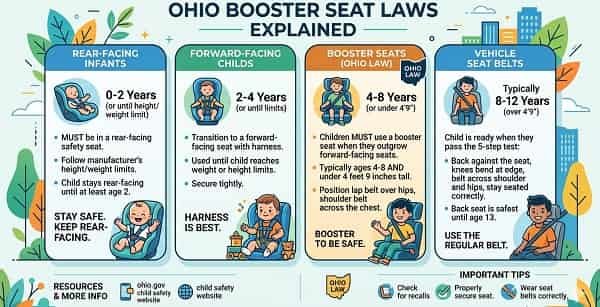
Children who have outgrown a forward-facing car seat but are younger than age 8 and shorter than 4 feet 9 inches generally must use a booster seat.
This law is stricter than some states because it considers both age and height.
Ohio Child Restraint Requirements by Age
Here is a simplified overview of Ohio child passenger safety laws.
| Child Age/Size | Ohio Requirement |
| Under 4 years or under 40 lbs | Child safety seat required |
| Age 4–7 and under 4’9″ | Booster seat required |
| Age 8–15 | Seat belt required |
| Over 4’9″ | Adult seat belt may be allowed if properly fitted |
Children Under Age 4
Children younger than age 4 or weighing less than 40 pounds must ride in a federally approved child safety seat.
Depending on the child’s size and development, this may include:
- Rear-facing car seats
- Forward-facing harness seats
Rear-facing seats are generally safest for infants and toddlers.
Ohio Booster Seat Requirements
Ohio law specifically requires booster seats for children who:
- Have outgrown traditional car seats
- Are younger than age 8
- Are shorter than 4 feet 9 inches
This means some children older than 8 may still benefit from booster seats if seat belts do not fit properly.
When Can a Child Stop Using a Booster Seat in Ohio?
Legally, children may transition out of booster seats when:
- They are at least age 8, or
- They are taller than 4 feet 9 inches
However, safety experts emphasize proper seat belt fit over age alone.
Many children still need booster seats until ages 10–12 depending on their height and body proportions.
What Safety Experts Recommend
Organizations such as:
- American Academy of Pediatrics
- National Highway Traffic Safety Administration
recommend children continue using booster seats until adult seat belts fit correctly.
Proper seat belt fit means:
- Lap belt rests on upper thighs
- Shoulder belt crosses the chest and shoulder
- Child can sit upright without slouching
Safety recommendations often exceed minimum legal requirements.
Types of Booster Seats Allowed in Ohio
Ohio law generally requires federally approved child restraint systems.
Common booster seat types include:
High-Back Booster Seats
These provide:
- Additional head support
- Shoulder belt guidance
- Neck protection
High-back boosters are especially useful in vehicles lacking rear headrests.
Backless Booster Seats
These are smaller and more portable but require proper vehicle head support.
Combination Seats
Some car seats convert from:
- Forward-facing harness systems
- To booster seats
These can adapt as children grow.
Penalties for Violating Ohio Booster Seat Laws
Violating Ohio child restraint laws can result in:
- Traffic citations
- Fines
- Court costs
Penalties may vary depending on circumstances and prior offenses.
While fines may seem relatively minor, the safety risks associated with improper restraints are much more serious.
Why Ohio Uses Height and Age Requirements
Ohio’s law recognizes that children develop at different rates.
A child’s height often matters more than age alone because adult seat belts are designed for larger bodies.
The 4-foot-9-inch guideline is widely used because most children reach safer seat belt fit around that height.
Ohio Seat Belt Laws for Older Children
Once children no longer require booster seats, seat belt laws still apply.
Ohio law generally requires:
- Drivers to ensure minors use proper restraints
- Older children to wear seat belts
Children between ages 8 and 15 must use seat belts properly while riding in vehicles.
Front Seat vs Back Seat Safety
Although Ohio law may not prohibit older children from sitting in front seats, safety experts strongly recommend children ride in the back seat whenever possible.
The back seat generally provides:
- Better crash protection
- Reduced airbag injury risk
- Improved overall safety
Children under age 13 are usually safest in rear seating positions.
Exceptions to Ohio Booster Seat Laws
Certain limited exceptions may apply in special situations.
Examples may include:
- Medical conditions
- Emergency transportation
- Vehicles without rear seats in some circumstances
However, safety professionals still encourage proper restraints whenever feasible.
Ride-Sharing, Taxis, and Booster Seats
Parents often wonder whether booster seat laws apply in:
- Uber vehicles
- Lyft rides
- Taxis
Ohio laws and local regulations may vary depending on vehicle classification.
Even if exemptions exist, parents are still encouraged to use appropriate restraints for safety.
Portable booster seats can be helpful for travel situations.
Rental Cars and Ohio Child Restraint Laws
Ohio booster seat requirements apply to rental vehicles as well.
Families traveling with children should ensure:
- Proper booster seats are available
- Seats are correctly installed
- Restraints meet federal standards
Most major rental agencies offer child restraint rentals.
Common Mistakes Parents Make
Several common mistakes can reduce child passenger safety.
Moving to Seat Belts Too Early
Many children are physically too small for adult seat belts alone.
Incorrect Seat Belt Placement
Shoulder belts behind the back or under the arm are dangerous.
Loose Booster Seat Installation
Booster seats must be positioned correctly for maximum protection.
Using Expired or Damaged Seats
Car seats and boosters have expiration dates and safety limitations.
Heavy Winter Coats Under Harnesses
Bulky clothing can prevent harnesses from fitting tightly.
Child Passenger Safety and Crash Statistics
Studies consistently show child restraints save lives.
Proper booster seat use significantly reduces injury risk during crashes.
Children improperly restrained may face:
- Head injuries
- Spinal injuries
- Internal organ damage
- Ejection from vehicles
Correct restraint systems are among the most effective safety measures available.
Free Car Seat Inspection Programs in Ohio
Many Ohio communities offer child passenger safety inspection programs.
Certified technicians can help parents:
- Install seats properly
- Check expiration dates
- Verify harness fit
- Review safety recommendations
Incorrect installation is surprisingly common.
Child Passenger Safety and Insurance Issues
Improper restraint use may sometimes affect:
- Insurance claims
- Injury lawsuits
- Liability determinations after crashes
Following safety laws can help protect both children and legal interests.
How Ohio Laws Compare to Other States
Ohio’s booster seat law is considered relatively safety-focused because it uses both:
- Age requirements
- Height requirements
Some states only use age minimums, while others use broader size guidelines.
Ohio’s 4’9″ standard aligns with many national child safety recommendations.
Future Changes in Child Passenger Safety Laws
Child safety laws continue evolving as crash research improves.
Future updates may involve:
- Stronger rear-facing recommendations
- Expanded booster seat requirements
- Enhanced child restraint standards
- New safety technologies
Vehicle design changes may also influence future regulations.
Tips for Parents and Caregivers
Parents can improve child passenger safety by:
- Following manufacturer instructions carefully
- Registering car seats for recalls
- Replacing seats after serious crashes
- Using age-appropriate restraints
- Checking seat belt fit regularly
Safety should always come before convenience.
Why Booster Seat Laws Matter
Booster seat laws exist because child passengers are especially vulnerable during accidents.
These laws help:
- Reduce fatalities
- Prevent severe injuries
- Encourage safer driving habits
- Educate parents about child safety
Even short car rides can become dangerous without proper restraints.
Legal Requirements vs Safety Recommendations
One important point for parents to understand is that legal minimums do not always equal best safety practices.
Many safety organizations recommend children remain in booster seats longer than required by law if:
- Seat belts do not fit correctly
- The child is still too small physically
Proper fit matters more than age alone.
Final Thoughts
Ohio booster seat laws are designed to protect children by requiring age- and height-appropriate restraint systems during vehicle travel. Under current Ohio law, children who have outgrown traditional car seats but are under age 8 and shorter than 4 feet 9 inches generally must use booster seats.
Although legal requirements establish minimum standards, many child safety experts recommend booster seat use until seat belts fit properly based on a child’s height and body structure. Proper booster seat use significantly reduces the risk of serious injuries during accidents and remains one of the most effective ways to protect young passengers.
Whether you are a parent, grandparent, caregiver, or traveler in Ohio, understanding booster seat laws and following modern safety recommendations can help ensure children remain as safe as possible every time they ride in a vehicle.
