
For millions of Americans living with sleep apnea, CPAP machines are an essential part of everyday life. These devices help keep airways open during sleep, improving breathing and reducing serious health risks linked to untreated sleep apnea. But many users eventually wonder: is it illegal to change CPAP pressure settings yourself?
The answer is not always straightforward.
In the United States, changing CPAP pressure settings is generally not treated as a criminal offense for patients using their own machine. However, CPAP devices are prescription medical equipment, and pressure settings are usually determined by licensed healthcare professionals. Adjusting those settings without medical supervision may create legal, insurance, warranty, or health-related consequences.
Understanding the difference between what is medically recommended and what is actually illegal is important for CPAP users.
Here is a detailed look at how CPAP pressure settings work, what U.S. law says, potential risks of changing settings yourself, and situations where legal issues may arise.
What Is a CPAP Machine?
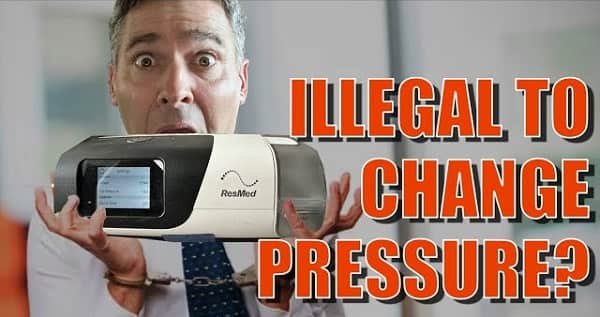
A CPAP machine — short for Continuous Positive Airway Pressure machine — is a medical device commonly prescribed for people with obstructive sleep apnea.
The machine delivers steady air pressure through a mask while the user sleeps. This airflow helps prevent airway collapse and keeps breathing consistent throughout the night.
CPAP therapy can help reduce:
- Loud snoring
- Interrupted breathing
- Daytime fatigue
- Heart-related risks
- Poor sleep quality
Because sleep apnea can affect overall health, CPAP therapy is considered an important medical treatment.
Why CPAP Pressure Settings Matter
The “pressure” on a CPAP machine refers to the amount of air being pushed through the device.
If the pressure is too low:
- Airways may still collapse
- Breathing interruptions may continue
- Treatment may become ineffective
If the pressure is too high:
- Users may experience discomfort
- Air swallowing can occur
- Nasal irritation may worsen
- Sleep quality may decline
That is why doctors usually prescribe pressure settings after:
- Sleep studies
- CPAP titration tests
- Medical evaluations
Pressure levels are intended to match a patient’s specific medical needs.
Is It Illegal to Change Your Own CPAP Pressure?
In most situations, it is not a criminal offense for a patient to adjust settings on their own personal CPAP machine.
There is generally no federal law in the United States that says a patient commits a crime simply by modifying their own device settings at home.
However, there are important legal and medical considerations.
CPAP Machines Are Prescription Medical Devices
In the United States, CPAP machines are regulated medical devices.
That means:
- A prescription is typically required to purchase one
- Pressure settings are generally part of the prescribed treatment
- Medical providers oversee therapy adjustments
The U.S. Food and Drug Administration (FDA) classifies CPAP devices as medical equipment that should be used under professional supervision.
So while adjusting settings yourself may not automatically be illegal, manufacturers and healthcare providers usually discourage unsupervised changes.
Why Some People Change Their CPAP Pressure
Many users become frustrated with their therapy and try adjusting settings themselves.
Common reasons include:
- Feeling like the pressure is too strong
- Difficulty exhaling
- Dry mouth or nasal irritation
- Feeling air-starved
- Mask leaks
- Claustrophobia
- Poor sleep quality
Some patients also find online tutorials explaining how to access “clinical menus” hidden inside CPAP machines.
This has made self-adjustment increasingly common.
Can Doctors or Suppliers Restrict Access to Pressure Settings?
Many CPAP machines include:
- Patient menus
- Provider or clinical menus
Clinical settings are often protected because they control therapy pressure and advanced treatment options.
Medical suppliers may refuse to provide instructions for changing these settings without physician approval.
This is mainly for safety and liability reasons rather than criminal enforcement.
Could Changing CPAP Pressure Cause Legal Problems?
Usually, legal issues arise indirectly rather than from the act itself.
Here are some examples.
Insurance Complications
Health insurance companies often require proof that CPAP therapy is being used correctly.
If unauthorized changes:
- Affect compliance reports
- Interfere with prescribed therapy
- Cause treatment failure
insurance providers may question coverage or reimbursement.
This can become especially important for:
- Medicare compliance
- Equipment replacement claims
- Rental agreements
Warranty Issues
Some manufacturers may argue that unauthorized modifications:
- Void warranties
- Interfere with approved medical use
- Create device liability concerns
Although adjusting standard settings may not always void coverage, improper alterations could create disputes.
Workplace or Commercial Driving Concerns
For commercial drivers, pilots, and certain regulated workers, sleep apnea treatment compliance can affect professional licensing.
If someone changes CPAP settings in a way that:
- Reduces treatment effectiveness
- Causes inaccurate compliance data
- Violates medical certification requirements
it could potentially create employment or licensing issues.
For example, truck drivers regulated by the Department of Transportation may face medical certification complications if sleep apnea treatment is not properly managed.
Could Changing Someone Else’s CPAP Pressure Be Illegal?
This is where legal risk becomes more serious.
If a person changes another individual’s prescribed medical settings without authorization, problems may arise.
Possible situations include:
- Caregiver interference
- Unauthorized medical treatment
- Negligence claims
- Professional misconduct
If harm results, civil lawsuits could follow.
In healthcare settings, unauthorized adjustments by unlicensed individuals may violate medical regulations or workplace policies.
Medical Risks of Adjusting CPAP Pressure Yourself
Even if changing pressure is not necessarily illegal, it can be medically risky.
Possible consequences include:
Ineffective Sleep Apnea Treatment
Incorrect settings may allow apnea episodes to continue untreated.
Central Sleep Apnea Problems
Excessively high pressure may contribute to complex breathing issues in some patients.
Sleep Disruption
Improper pressure may worsen sleep quality instead of improving it.
Increased Cardiovascular Risks
Untreated or poorly treated sleep apnea may increase risks related to:
- High blood pressure
- Heart disease
- Stroke
CPAP Intolerance
Bad settings can make users abandon therapy entirely.
Why Doctors Prefer Professional Pressure Adjustments
Sleep specialists usually determine pressure settings based on medical data rather than guesswork.
Modern evaluations may include:
- Sleep studies
- Oxygen monitoring
- Airflow measurements
- Apnea event tracking
Doctors can also distinguish whether problems are caused by:
- Pressure settings
- Poor mask fit
- Anxiety
- Nasal congestion
- Incorrect machine type
Sometimes patients think pressure is the problem when another issue is actually causing discomfort.
Auto-Adjusting CPAP Machines and Legal Questions
Some newer CPAP devices are called APAP machines, or Auto-Adjusting Positive Airway Pressure machines.
These devices automatically vary pressure within a prescribed range based on breathing patterns.
Because APAP systems self-adjust, many users assume manual changes are harmless. However, even APAP devices typically operate within medically prescribed limits.
Changing those ranges without guidance may still create therapy problems.
Are There Federal Laws About CPAP Settings?
There is no widely known federal criminal statute specifically making it illegal for patients to alter their own CPAP pressure settings.
However, CPAP devices remain regulated under broader medical device laws overseen by the FDA.
Issues become more legally serious when involving:
- Fraud
- Unauthorized medical practice
- Insurance deception
- Professional negligence
What About Online Tutorials Showing How to Change Pressure?
The internet contains countless videos and forums explaining how to access clinical menus.
Watching or using these tutorials is generally not illegal.
However:
- Manufacturers may discourage it
- Healthcare providers may warn against it
- Following incorrect instructions could create health risks
Not all online advice is medically accurate.
Can Sleep Clinics Detect Pressure Changes?
Many modern CPAP machines collect therapy data electronically.
Depending on the device, providers may review:
- Usage hours
- Pressure levels
- Mask leaks
- Apnea events
- Therapy compliance
If settings are changed, the machine’s data logs may reflect those adjustments.
Is It Illegal to Buy a Used CPAP and Change Settings?
Buying or selling used CPAP equipment can involve separate legal and regulatory concerns.
Some online marketplaces restrict CPAP sales because the devices require prescriptions.
Changing settings on a secondhand device may not itself be criminal, but using improperly configured equipment could pose medical dangers.
Sanitation and maintenance issues are also important.
Why This Topic Creates Confusion
Many people confuse:
- Medical recommendations
with - Criminal laws
Doctors often strongly advise against self-adjustment because of patient safety. But medical advice is not always the same thing as criminal prohibition.
In most cases, changing your own CPAP pressure falls into a gray area involving:
- Medical supervision
- Insurance rules
- Manufacturer policies
- Health risks
rather than traditional criminal law.
Best Practices Before Changing CPAP Pressure
Instead of changing settings alone, experts often recommend:
Contacting Your Sleep Specialist
Doctors can review symptoms and therapy data safely.
Checking Mask Fit
Many pressure complaints are actually mask-related.
Reviewing Humidity Settings
Dryness and discomfort sometimes come from humidity problems, not pressure.
Requesting a Re-Titration Study
Pressure needs may change over time due to:
- Weight changes
- Aging
- Medical conditions
Final Thoughts on Whether It Is Illegal to Change CPAP Pressure
So, is it illegal to change CPAP pressure settings?
For most patients using their own CPAP machine in the United States, adjusting pressure settings is generally not considered a criminal offense. However, CPAP devices are prescription medical equipment, and unsupervised changes can create health, insurance, warranty, and compliance issues.
The bigger concern is usually safety rather than criminal prosecution.
Improper pressure settings may reduce treatment effectiveness or create new health problems, which is why healthcare providers strongly encourage patients to consult sleep specialists before making changes.
While online guides may make pressure adjustments seem simple, sleep apnea therapy is highly individualized. What works for one person may be harmful or ineffective for another.
