
Starbucks is no stranger to lawsuits, but recent class action litigation has once again placed the coffee giant under intense public and legal scrutiny. From allegations involving misleading advertising and ethical sourcing claims to lawsuits over ingredients, labor practices, and customer safety, Starbucks has faced a growing number of legal challenges in recent years.
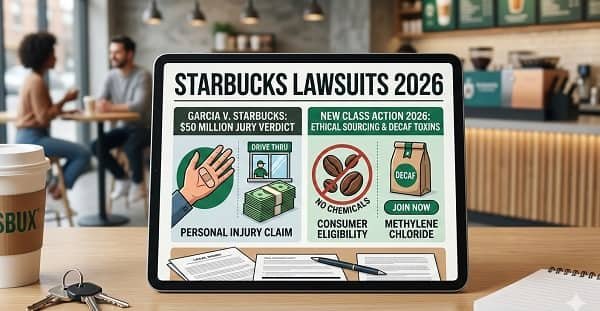
One of the most talked-about recent cases involves allegations that Starbucks misled consumers about its coffee products and sourcing practices. Plaintiffs claim the company marketed certain products using phrases such as “100% Ethical Coffee Sourcing” and “100% Arabica Coffee” while allegedly failing to disclose important information consumers would consider material when making purchasing decisions.
As class action lawsuits against major corporations continue to increase nationwide, many consumers are now wondering:
- What exactly is Starbucks accused of?
- What is a class action lawsuit?
- Could customers receive compensation?
- How do these lawsuits affect businesses and consumers?
Here is a detailed look at the Starbucks class action lawsuit allegations, how class actions work in the United States, and why these legal battles matter far beyond coffee.
What Is a Class Action Lawsuit?
A class action lawsuit allows a group of people with similar claims to sue a company together rather than filing separate individual lawsuits.
These lawsuits are commonly used in cases involving:
- Consumer fraud
- False advertising
- Defective products
- Privacy violations
- Employment disputes
- Securities fraud
Instead of hundreds or thousands of individual cases, the legal claims are combined into one larger lawsuit.
In the Starbucks litigation, consumers allegedly purchased products believing certain marketing claims were accurate and later argued they were misled.
What Is Starbucks Accused Of?
Recent Starbucks class action lawsuits have involved multiple allegations, but one of the most widely discussed cases centers on claims involving:
- Ethical sourcing representations
- Coffee labeling
- Alleged undisclosed chemical traces in decaffeinated coffee products
According to the lawsuit, Starbucks allegedly promoted its coffee as:
- “100% Ethical Coffee Sourcing”
- “100% Arabica Coffee”
while plaintiffs claim investigations and testing raised questions about those representations.
The lawsuit reportedly alleges that consumers paid premium prices based partly on Starbucks’ public marketing and branding claims.
It is important to understand that allegations in a lawsuit are not automatically proof of wrongdoing. Starbucks has the opportunity to contest the claims in court.
The Ethical Sourcing Controversy
One major focus of the litigation involves Starbucks’ ethical sourcing program.
Starbucks has long promoted its sourcing standards through programs emphasizing:
- Sustainability
- Ethical farming
- Worker protections
- Responsible supply chains
However, lawsuits and advocacy groups have alleged that some farms tied to Starbucks-certified sourcing systems were linked to labor abuses or poor working conditions.
Plaintiffs argue that consumers may have relied on Starbucks’ ethical branding when deciding to buy the company’s products.
This issue reflects a broader legal trend in the United States where companies increasingly face lawsuits over:
- ESG claims
- Sustainability marketing
- Ethical sourcing statements
- Environmental branding
Allegations About Coffee Ingredients
Another controversial part of the litigation involves allegations concerning decaffeinated coffee products.
According to court filings and reports, plaintiffs claim independent testing detected trace levels of volatile organic compounds (VOCs) in certain products.
The lawsuit argues that these alleged findings may conflict with consumer expectations created by Starbucks’ product labeling and marketing.
Starbucks has disputed or may dispute aspects of these allegations as the litigation proceeds.
Importantly, class action filings often include disputed scientific claims that courts must evaluate carefully during the legal process.
Why Consumers File Class Action Lawsuits
Consumer class actions usually argue that:
- Customers paid more because of certain representations
- Companies failed to disclose material information
- Advertising created misleading impressions
In cases involving food and beverages, lawsuits often focus on:
- Labeling accuracy
- Ingredient disclosures
- Health-related marketing
- Sustainability claims
Even when individual damages are relatively small, combining many consumers into one class action can create substantial legal exposure for large corporations.
Starbucks Has Faced Other Class Action Lawsuits Too
The current lawsuit is far from the only legal challenge Starbucks has encountered over the years.
Previous Starbucks class action cases have involved allegations related to:
- Underfilled beverages
- Product labeling
- Employee wage disputes
- Uniform reimbursement claims
- COBRA notice violations
- Consumer advertising practices
For example, earlier lawsuits accused Starbucks of underfilling latte drinks compared to advertised sizes, though some of those claims were later dismissed in court.
Like many large corporations, Starbucks frequently faces litigation because of its massive customer base and nationwide operations.
Investor Lawsuits Against Starbucks
Starbucks has also faced securities-related class action litigation from investors.
One investor lawsuit alleged that Starbucks concealed declining sales trends and made misleading public statements about company performance.
Securities class actions differ from consumer lawsuits because they focus on:
- Shareholder losses
- Stock price impacts
- Corporate disclosures
- Financial reporting
Large publicly traded companies often face both consumer and investor litigation simultaneously.
Labor and Employment Lawsuits
Starbucks has also been involved in significant labor-related legal disputes in recent years.
These cases have involved:
- Unionization efforts
- Employee discipline
- Wage disputes
- Workplace policies
Some labor conflicts involving Starbucks and union activity have attracted national media attention and federal labor board involvement.
Employment-related class actions can become especially expensive for companies because they may involve:
- Large employee groups
- Back pay claims
- Labor law penalties
How Class Action Lawsuits Work
Class action cases usually follow several stages.
Filing the Complaint
Attorneys file allegations against the company.
Class Certification
The court decides whether the plaintiffs can proceed as a class.
Discovery
Both sides exchange evidence and documents.
Motions and Challenges
The defendant may ask the court to dismiss the case.
Settlement or Trial
Many class actions settle before trial, though some proceed to court verdicts.
Could Starbucks Customers Receive Compensation?
Possibly — but not automatically.
If a class action settles or plaintiffs win in court, compensation may include:
- Cash payments
- Refunds
- Product vouchers
- Injunctive relief
- Changes to company practices
However:
- Many lawsuits are dismissed
- Some settle for relatively small individual payments
- Litigation can take years
Consumers usually must meet eligibility requirements to participate in settlements.
Why Companies Often Settle Class Actions
Corporations sometimes settle lawsuits even while denying wrongdoing.
Reasons may include:
- Avoiding prolonged litigation
- Reducing legal expenses
- Managing public relations
- Limiting uncertainty
Settlements do not always mean a company admits liability.
The Role of Marketing in Modern Lawsuits
Modern consumers increasingly pay attention to:
- Sustainability
- Ethical sourcing
- Environmental practices
- Ingredient quality
As a result, businesses now face greater legal scrutiny over advertising language.
Terms like:
- “Natural”
- “Ethical”
- “Sustainable”
- “Clean”
- “100%”
can become legal flashpoints if consumers believe the claims are misleading.
The Starbucks lawsuit reflects this growing trend in consumer protection litigation.
Social Media and Public Attention
Social media has dramatically amplified the visibility of class action lawsuits.
Online discussions, TikTok videos, YouTube commentary, and viral headlines often spread information about lawsuits long before courts reach final decisions.
This increased visibility can affect:
- Consumer trust
- Corporate reputation
- Investor confidence
- Brand loyalty
Major brands like Starbucks often face intense public scrutiny whenever lawsuits emerge.
Why Class Actions Matter Beyond Starbucks
The Starbucks litigation reflects broader legal and cultural shifts in the United States.
Consumers today increasingly expect:
- Transparency
- Ethical sourcing
- Accurate labeling
- Corporate accountability
At the same time, businesses argue that:
- Marketing language may be misunderstood
- Lawsuits can overreach
- Plaintiffs sometimes misinterpret branding statements
Courts must balance these competing perspectives carefully.
Common Misconceptions About Class Action Lawsuits
“A lawsuit means the company is guilty.”
False. Allegations must still be proven or resolved.
“Everyone in the class gets huge payouts.”
Often false. Individual payments may be modest.
“Class actions only help lawyers.”
While attorney fees can be substantial, class actions can also pressure companies to change practices.
“Large corporations never lose.”
Many companies settle or lose class actions, though outcomes vary widely.
Final Thoughts on the Starbucks Class Action Lawsuit
Starbucks is currently facing multiple legal challenges, including consumer class action lawsuits involving allegations about ethical sourcing practices, coffee labeling, and ingredient disclosures.
The lawsuits argue that consumers may have been misled by certain marketing claims and paid premium prices based on those representations. Starbucks, like any defendant, has the right to contest the allegations in court.
Whether these lawsuits ultimately succeed remains to be seen. However, the growing legal scrutiny surrounding Starbucks highlights a much larger trend in American consumer law: companies are increasingly being held accountable for how they market products, describe sourcing practices, and communicate with the public.
As class action litigation continues to evolve, businesses and consumers alike are paying closer attention to what corporate promises really mean — and whether advertising claims truly match reality.
